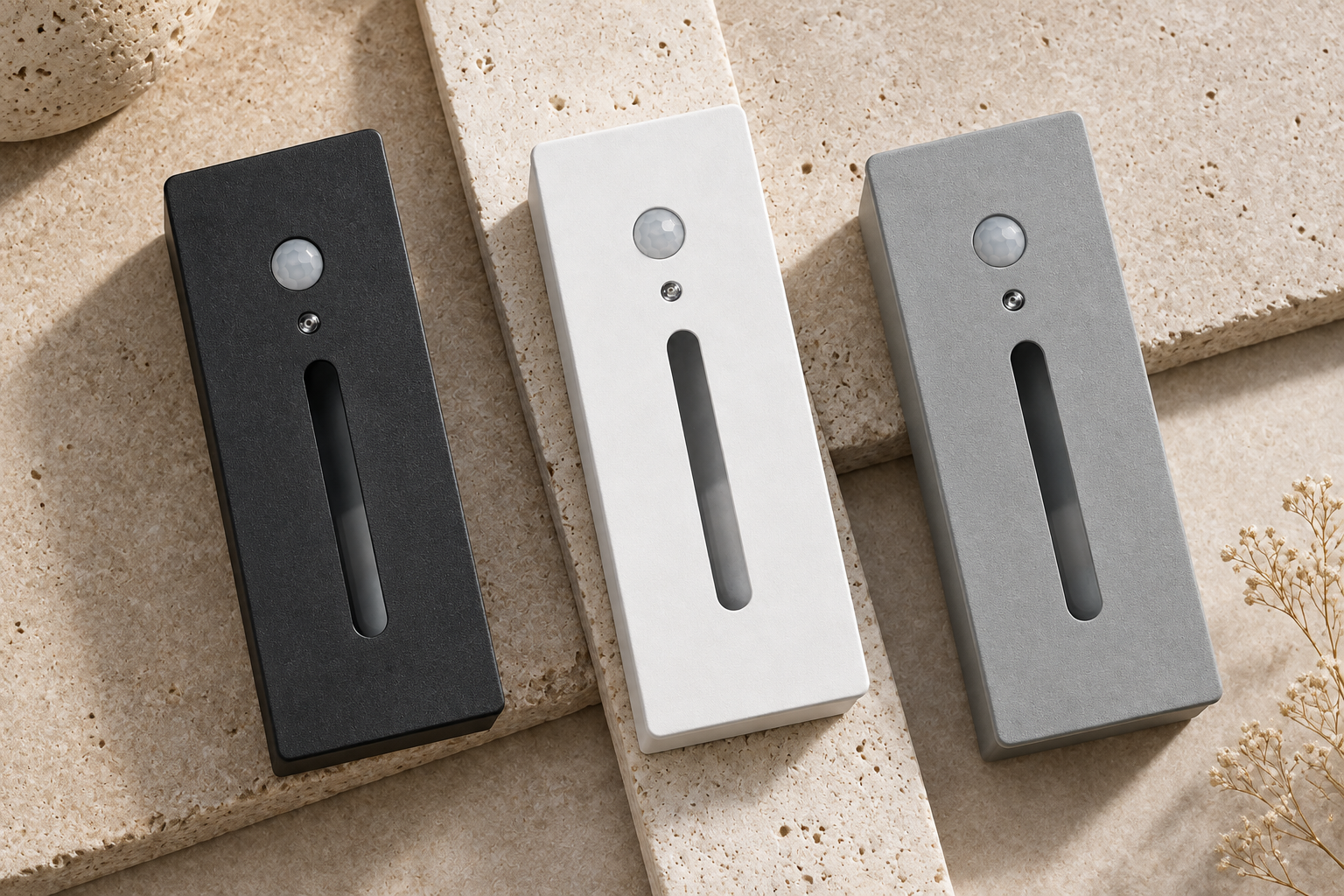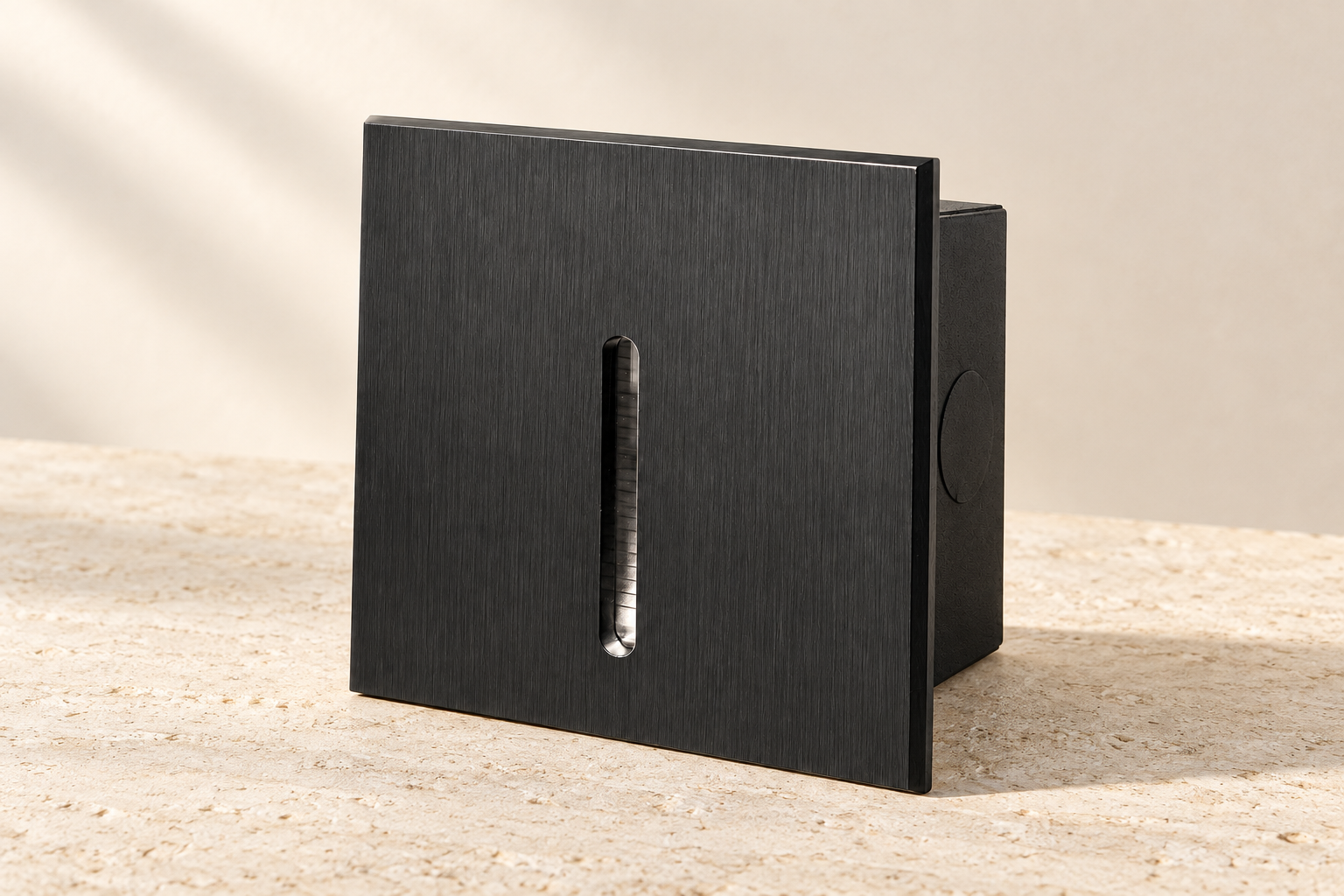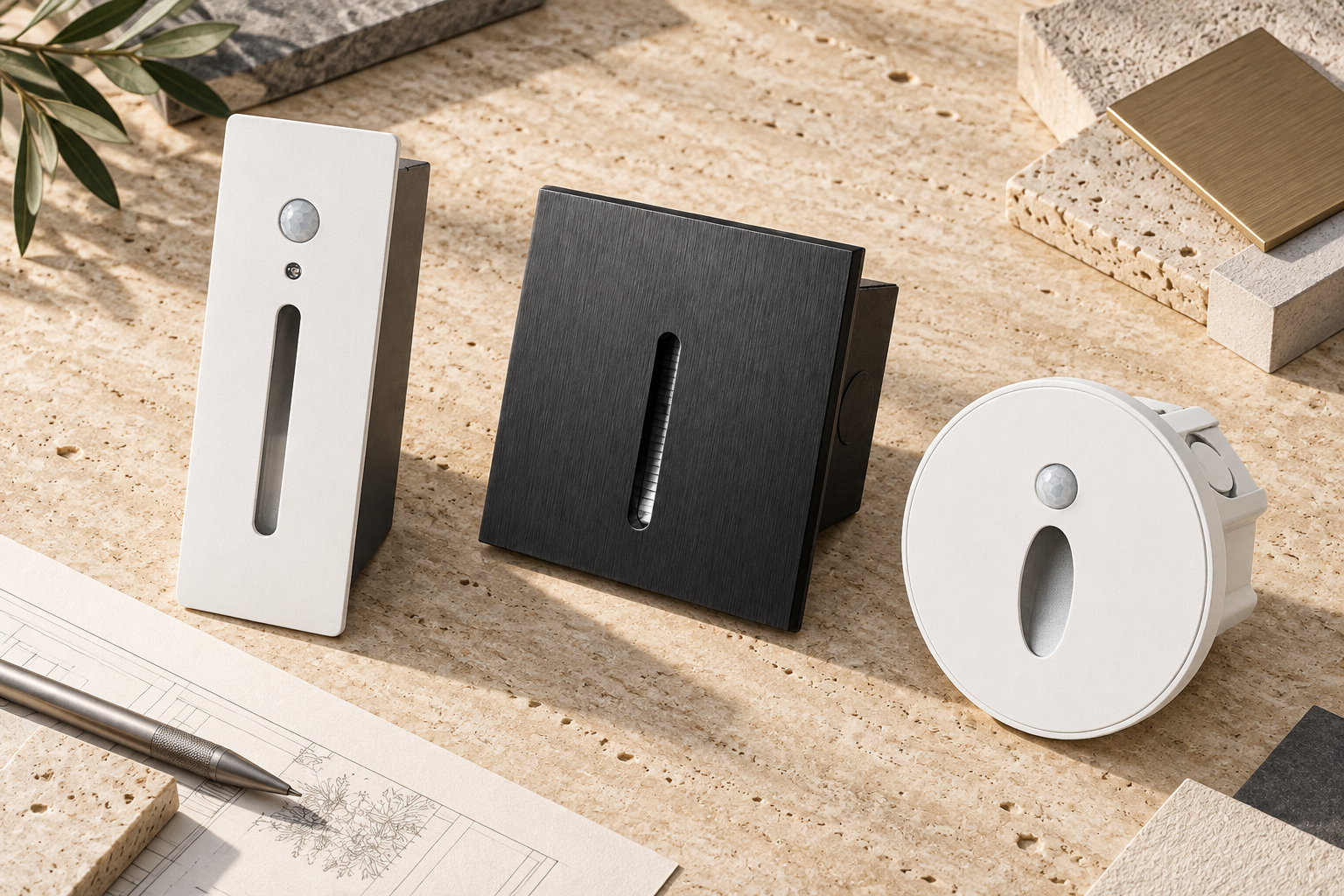

A useful project brief connects the visual idea with the decisions needed to make it. It does not need to be long. It needs to tell the next person what is known, what is open and what should happen next.
For architectural step and wall lighting, a small set of coordinated details can make an initial quotation much more useful. The purpose is to give the supplier a shared basis for a proposal, while keeping assumptions visible until the design is confirmed.
Start with a clear picture of the space
Describe the application in one or two sentences. Include the building type, the location of the fitting and the intended effect. “Low-level guidance along an internal timber stair with pale plaster walls” communicates more than “warm, minimal lighting.”
Add a plan or a marked-up photograph that identifies the relevant zone. A mood board can explain atmosphere, but a section explains whether a product can fit. Where you already have a model in mind, include its full reference and the reason it interests you: its aperture, mounting method, finish or control.
Separate confirmed details from open questions
A provisional quantity can support early pricing as long as it is labelled. An assumed wall depth should not silently become a manufacturing instruction. Use a simple status column to keep that distinction visible.
| Detail | Useful information | If it is still open |
|---|---|---|
| Product | Model and control variant | Share the required effect and mounting context |
| Installation | Wall build-up, depth and opening | Request the current dimension drawing |
| Appearance | Finish reference and target CCT | Ask which samples are available |
| Quantity | Number by model and project phase | State a working estimate |
| Delivery | Destination and required milestone | Ask for current timing assumptions |
Keep electrical requirements with the technical brief. The project’s electrical designer or installer should establish the supply and control arrangement; the supplier can then confirm the model’s requirements and provide the relevant documentation.
A good brief makes the next decision clear, even when the whole project is not yet decided.
Attach files that answer a question
Choose a small, current set of references. Name each file by zone and revision so the proposal can point back to the same information. A practical initial package might contain:
- A marked plan showing the route, fitting positions and quantities by area.
- One section detail showing finished surfaces, cavity depth and access.
- A material reference identifying the wall, tread and requested metal finish.
- A short schedule listing models, colour temperatures, controls and open decisions.
- A milestone note stating when the sample or pricing decision is needed.
Avoid sending several unexplained versions of the same drawing. If a detail changes after the inquiry, identify the revision and explain whether it affects fit, appearance, quantity or programme.
Ask for a response you can act on
State the next step explicitly: an initial quotation, a sample proposal or a technical review. Ask the response to identify its model references, included options, assumptions and current lead times. For pricing, clarify the currency, delivery basis and any packing requirements relevant to your project.
Bring the answer back into the same brief. Resolve open items with the project team, approve the sample and retain a dated reference before the order is released. A clear brief remains useful throughout the project: it becomes the record that connects the first conversation with the final specification.
Ready to assemble yours? Use the lighting sourcing checklist as a final pass before sending the inquiry.