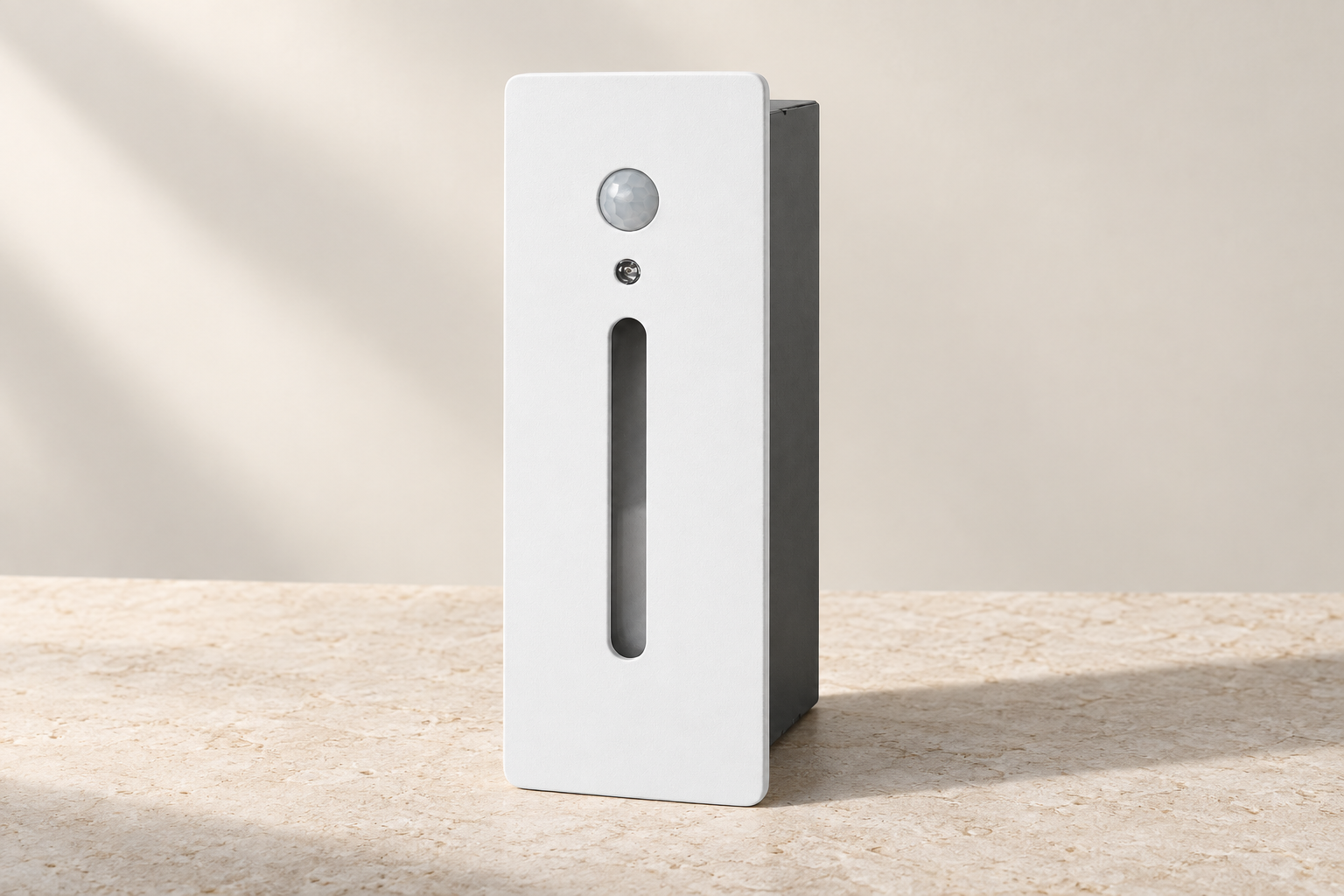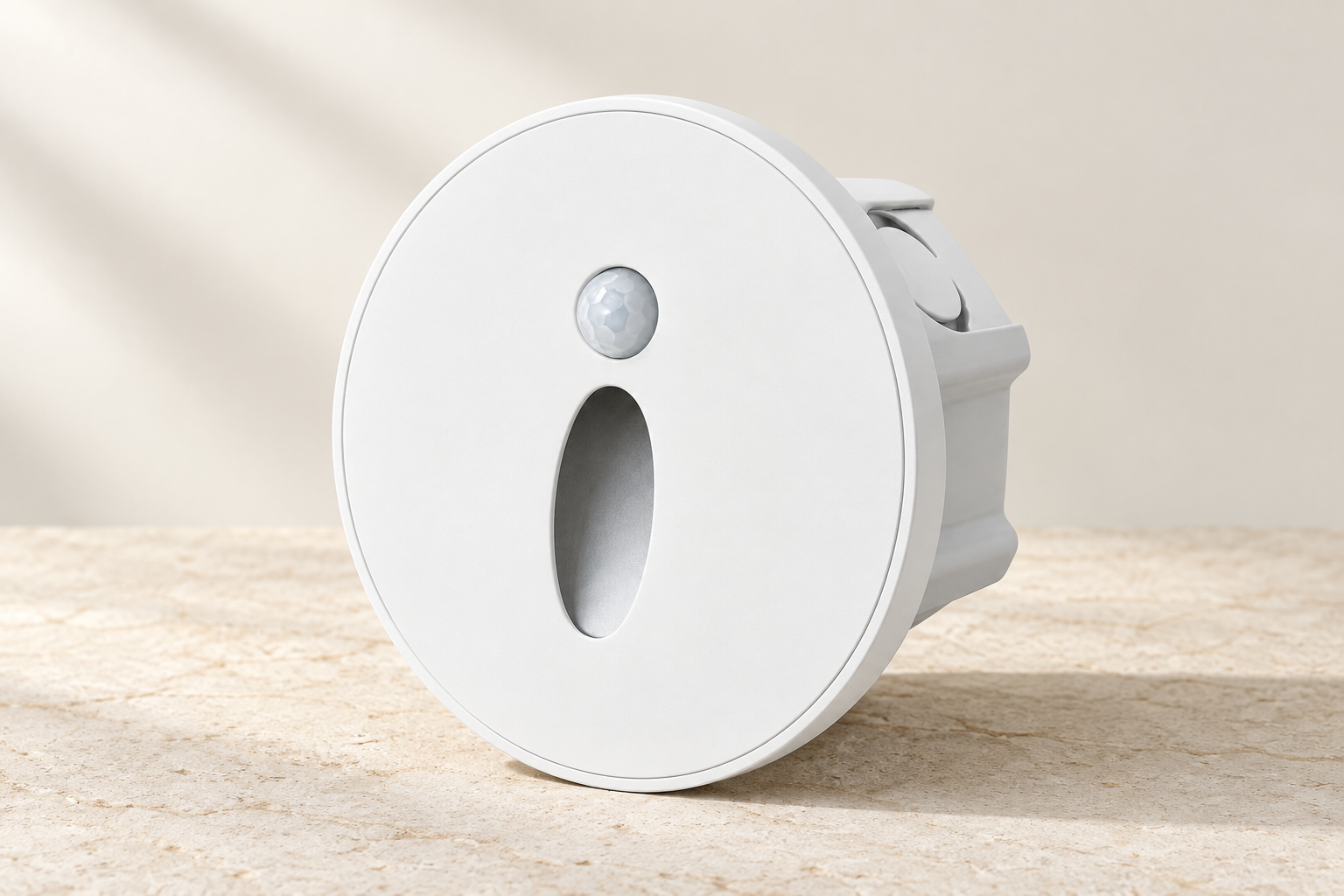
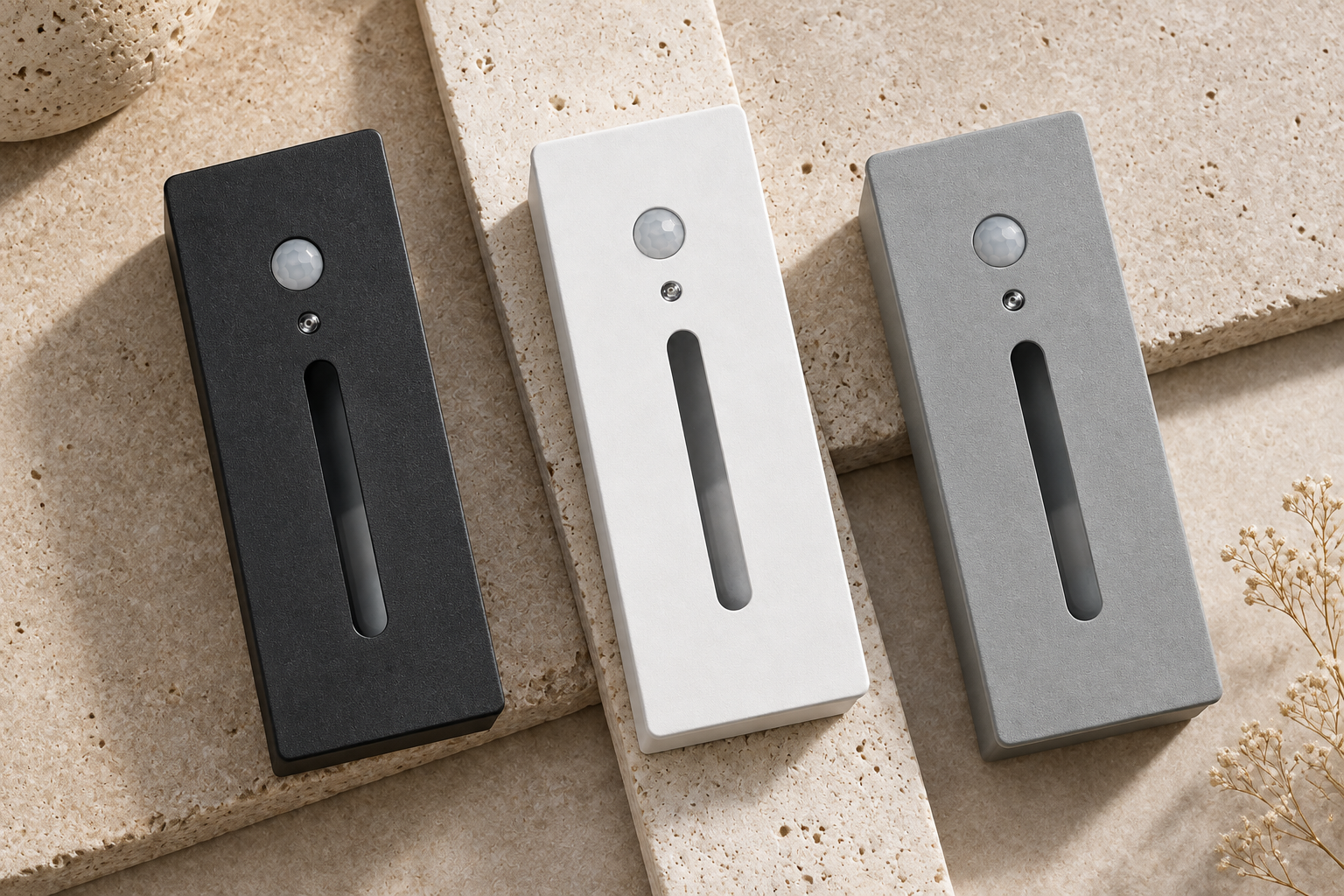
A small fitting can repeat dozens of times across a project. When the finish varies, that repetition makes the difference more visible. A shared physical reference helps the team agree what “matte black” or “brushed aluminium” means in the actual space.
Define the visual target
Begin with a named finish and a material sample where possible. Record colour, sheen and surface texture separately. A brushed face can reflect a line of light that is barely visible on a matte surface, even when their base colours are similar.
Place the sample beside the wall, floor and nearby metalwork. Review it under the intended lighting and in daylight. Do not use a screen image as the only colour reference.
Review the full assembly
Compare the front face, trim and any visible housing together. Look at edges, fixing points and the junction with the wall, because these are the details a close view will reveal.
- Note the approved finish name and supplier reference.
- Photograph the assembly alongside the surrounding material.
- Record which surfaces remain visible after installation.
- Retain the physical sample for later comparisons.
Protect the repeat order
Attach the finish reference and sample date to the purchase brief. If production takes place in phases, ask how later batches will be checked against that reference. Confirm any availability changes before releasing the next order.
A finish record belongs with the model and control version, rather than in an isolated email. See from approved sample to repeat order for a practical handover sequence.