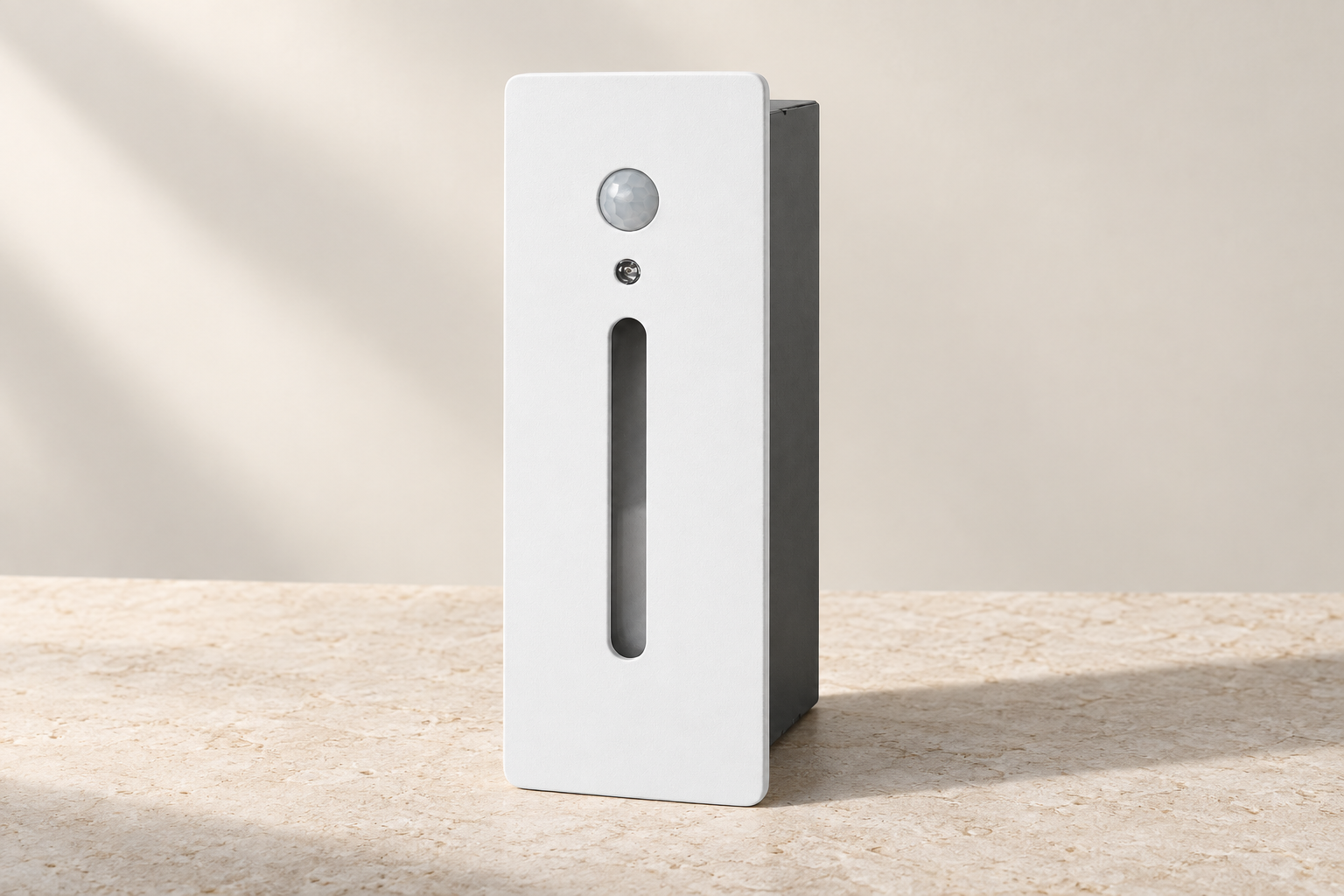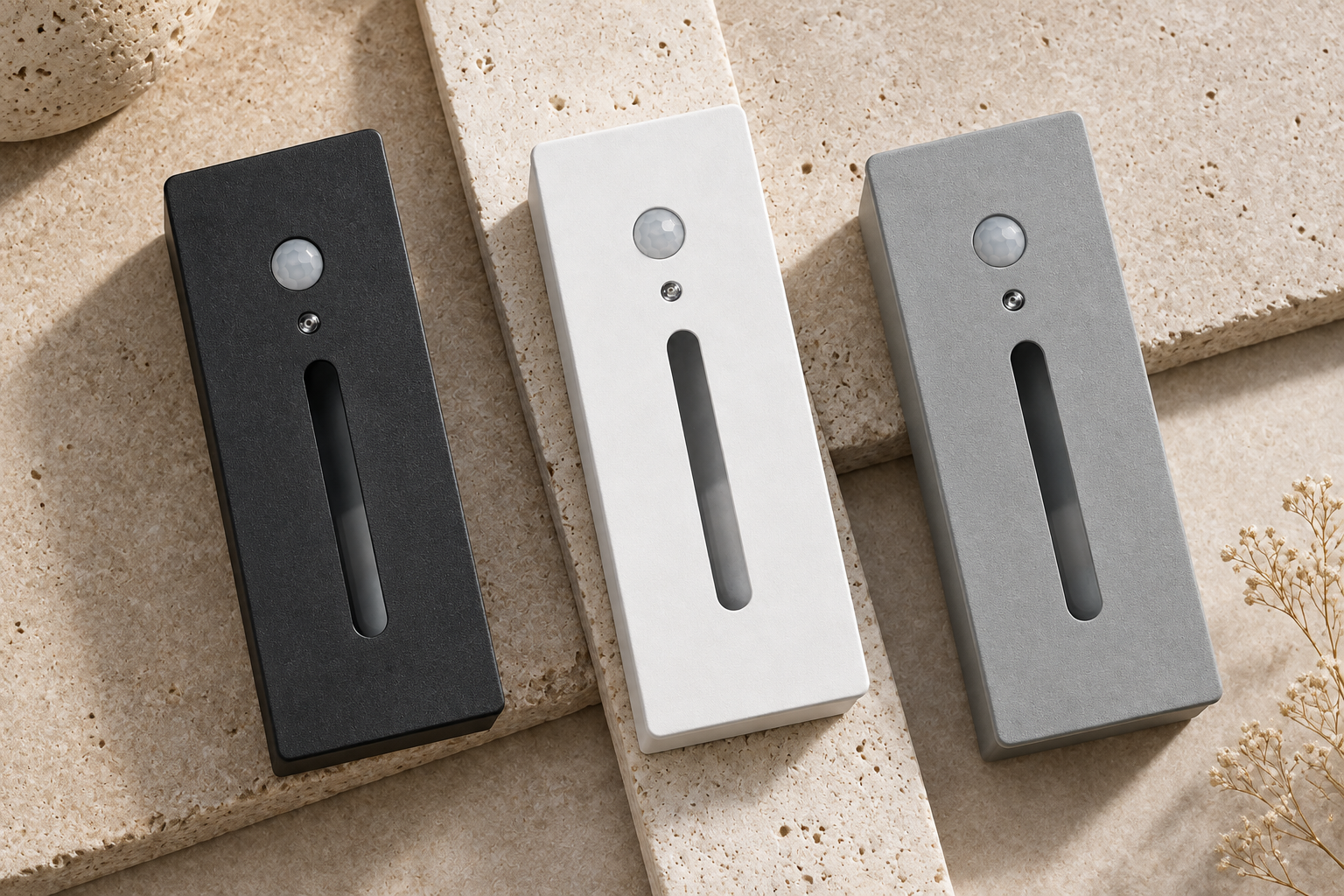
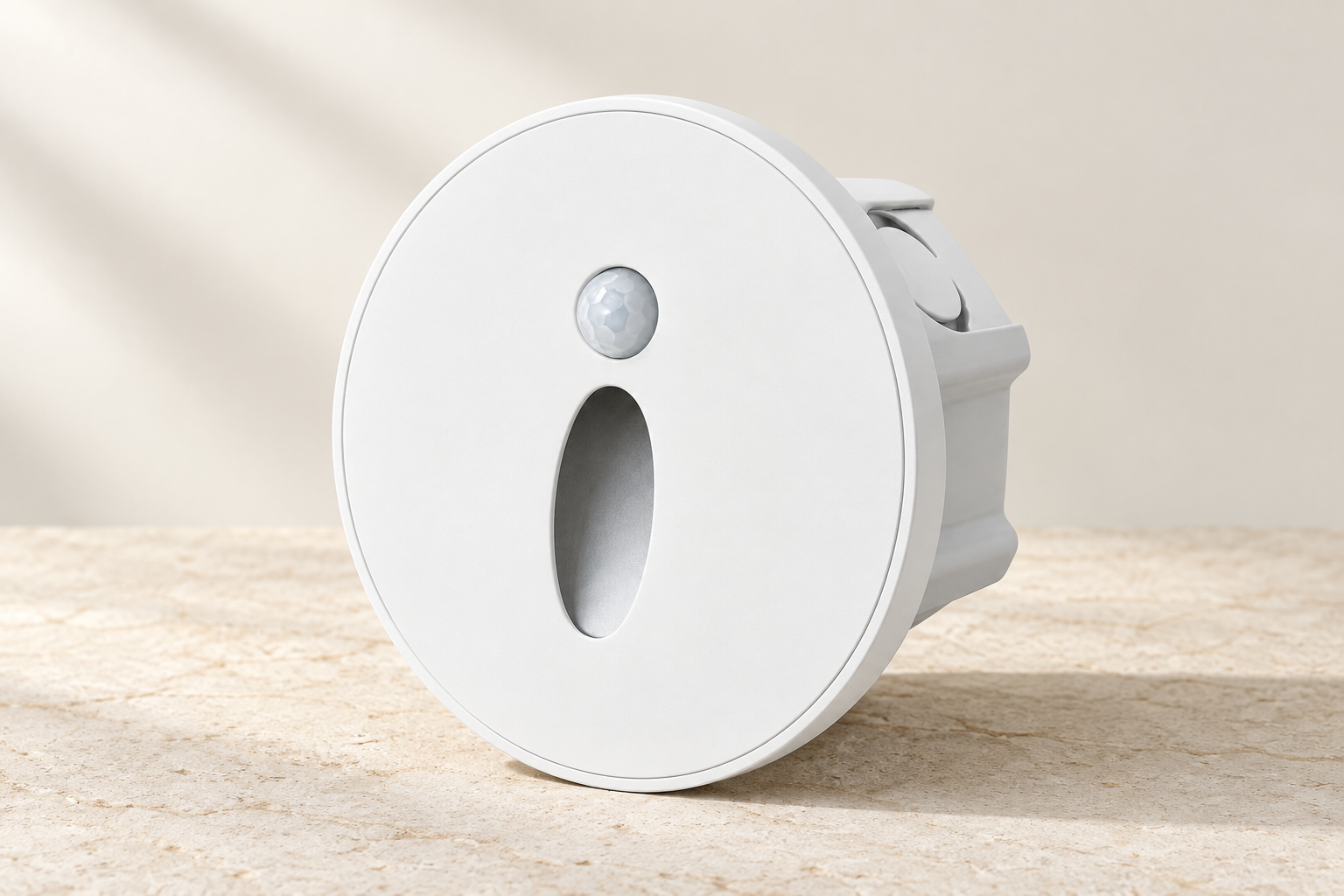
The control arrangement shapes how a light feels in everyday use. A quiet transition should respond in a way people can understand, whether the fitting is triggered by movement or operated from a switch.
Match control to movement
A sensor version can suit occasional passage where hands-free operation is useful. A switched version gives a direct control point and may fit a project’s existing electrical arrangement. Start by describing what should happen when someone enters, pauses and leaves the space.
For a stair, consider the approach from both ends and the pause on a landing. A fitting positioned for a pleasing beam may not automatically provide the desired sensor coverage.
Check the edge cases
Record the situations that the control needs to handle. Depending on the model and sensor type, these can include daylight, pets, nearby doors and people moving beyond the intended zone.
- Walk the route in both directions.
- Pause where a person might stop naturally.
- Observe the delay before the light switches off.
- Check what adjacent fittings do during the sequence.
Confirm which settings are available for the exact variant rather than assuming sensitivity or timing can be adjusted.
Confirm the electrical arrangement
Ask for the wiring diagram, supply requirements and documented sensing behaviour. If integration with another control system or dimmer is intended, request explicit compatibility information before ordering.
Test a sample in the proposed position and retain the approved control variant in the project brief. A clear description of the expected sequence is as useful as the model number.