A custom lighting sample should answer specific questions before a production order is released. A good-looking fixture is valuable, but an approval such as “looks fine” leaves mounting, controls, documentation and repeatability open. A clear sample record gives the buyer and supplier a common reference for what was accepted and what still needs correction.
The twelve checks below organize that review. They should be adapted to the project’s application and risk. Product certification, regulated tests and electrical safety assessments require appropriate evidence and qualified reviewers; a buyer’s visual inspection is only one part of the complete approval process.
Checks 1–2: Identify the sample and the brief
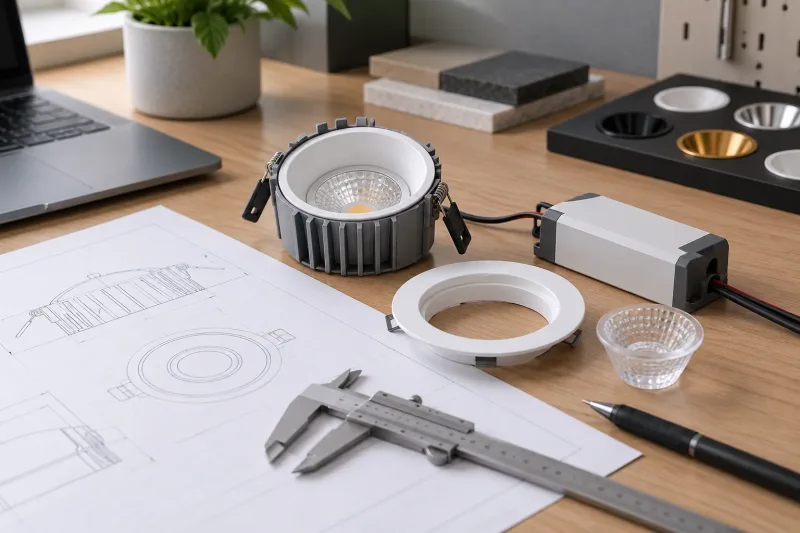
1. Confirm identity. Record the model, sample serial or reference, drawing revision, component list and date received. Photograph the labels and complete assembly. If several variants arrive, label them separately so comments on one finish or driver do not accidentally apply to another.
2. Reconcile the brief. Compare the sample with the approved requirements, not with the latest informal message. Mark each requirement as accepted, rejected or awaiting evidence. Ask the supplier to list known deviations. A sample may intentionally include a provisional component; that can be useful for development, but it must not disappear into a blanket production approval.
Checks 3–4: Verify dimensions and mounting
3. Check fit. Review key dimensions, cutouts, recess depth, cable entry and clearances against the controlled drawing. Use the actual mounting environment or a representative mockup where possible. Face dimensions alone cannot establish that a recessed body fits behind the finished surface.
4. Check the mounting arrangement. Have the responsible reviewer assess the supplied bracket, base, retention details and access. Record what the sample includes and what the installer must provide. Do not treat a fixture resting on a bench as proof of installed support. Structural and electrical decisions should remain with the qualified project team.
Checks 5–6: Review finish and visual details
5. Approve the finish reference. Compare color, texture and sheen under agreed lighting. Keep a physical reference where feasible; a screen image can change with display and exposure. Record acceptable visible variation and which surfaces matter most. A color name alone does not establish a repeatable acceptance criterion.
6. Review workmanship and service access. Inspect joints, edges, diffuser alignment, visible fasteners and cleaning access. Confirm how permitted service tasks will be performed without damaging the finish. Note which observations concern the prototype process and which need correction before production. Ask how the supplier will control those details in later units.
Checks 7–8: Assess light and controls
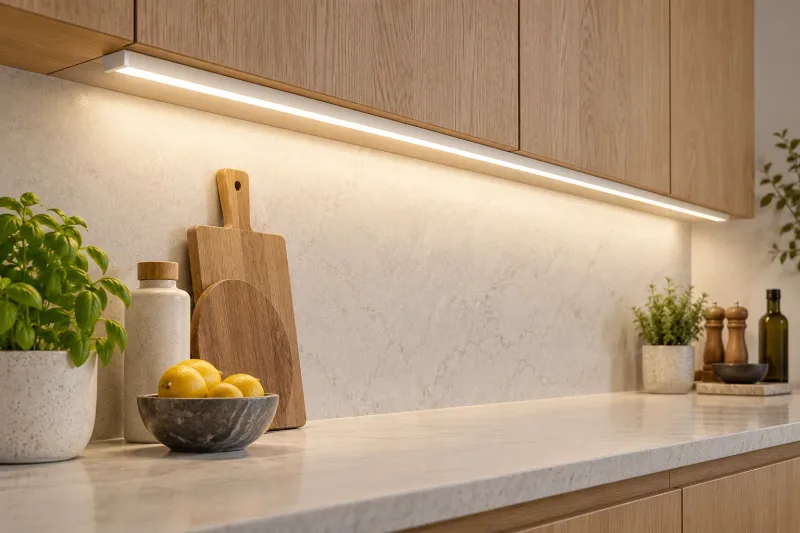
7. Review the light output. Evaluate the complete fixture in the intended arrangement, including cover, lens and final finish. Record the target plane, mounting position and viewing locations. If the project requires measured performance, request the corresponding report and identify its exact configuration. Photographs support appearance review but cannot establish photometric compliance.
8. Test the control behavior. Review normal scenes, the lowest required setting, start-up and restart behavior using the approved driver and controller. Log settings and exact component references. The LED dimming compatibility guide shows why a “dimmable” label alone does not define a satisfactory assembled result.
Checks 9–10: Verify technical evidence
9. Review electrical and thermal records. Request evidence appropriate to the destination market and actual configuration. Ask the qualified reviewer to examine the electrical design and operating-temperature data. A sample that illuminates successfully for a brief demonstration does not establish long-term performance or suitability inside the final enclosure.
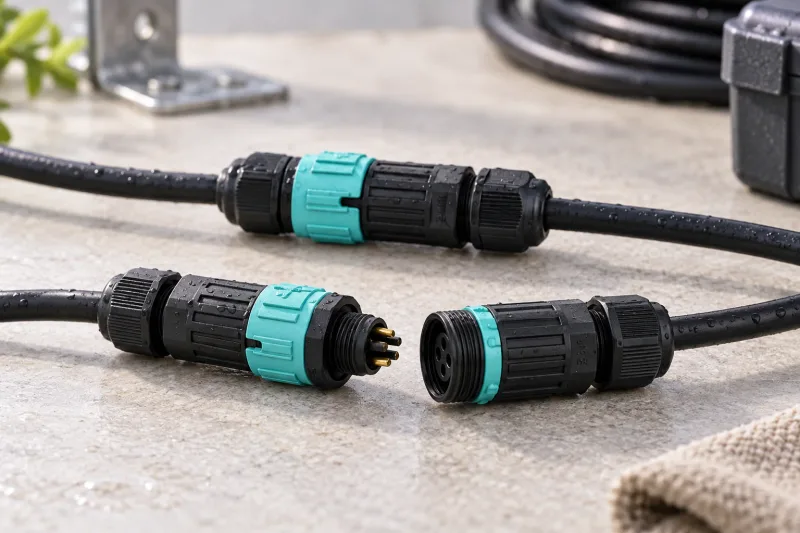
10. Review environmental requirements. Check the intended location, housing joints, cable assembly and finish against the documented conditions. Confirm which tests apply to the complete fixture and which apply only to a component. An ingress rating does not independently establish corrosion resistance or every installed condition. Keep unresolved evidence clearly marked before release.
Checks 11–12: Approve packaging and production controls
11. Review packaging and information. Check protective packing, product labels, instructions, variant identification and any branding agreed in the scope. Confirm the language and market details with the responsible team. If delivery to a project site involves staged unpacking or spare units, ensure cartons and product references remain easy to match.
12. Freeze the accepted configuration. Agree the controlled drawing, component list, finish reference, reports and open-item closure. Define which substitutions require written approval and what inspection plan will be used for production. ISO’s introduction to the ISO 2859 series describes acceptance-sampling frameworks; it does not supply a universal plan for every lighting order.
Use one decision table
| Review outcome | Meaning | Appropriate next step |
|---|---|---|
| Accepted | Agreed criteria and evidence are satisfied | Retain the controlled reference |
| Accepted with limited condition | A defined scope is accepted; named items remain open | State the limit and responsible closure owner |
| Revision required | A requirement is not met | Correct and recheck the affected areas |
| Evidence pending | The result cannot yet be assessed | Obtain documentation or qualified review |
| Production release | All required gates are closed | Issue approval against the exact revision |
Avoid ambiguous words such as “generally approved.” A limited approval should identify what it authorizes and what it does not authorize within the agreed development process. The record needs enough detail for a supplier representative who did not attend the sample meeting to understand the decision.
A worked approval example
Assume a hotel orders a custom wall light with an approved bronze finish and a dimmed evening scene. The sample matches the housing drawing and finish, but the driver differs from the proposed component list and the required low scene has not been tested. The team records appearance approval while leaving control approval and technical review pending.
After the supplier provides the exact driver documents and a qualified compatibility test, the team either accepts the revision or requests a change. Production release refers to the resulting complete configuration. This hypothetical case illustrates a controlled decision; it does not imply a product promise, order quantity or KEEPSUN lead time.
Turn the record into a production reference
Keep a dated approval sheet with photographs, measured results, reviewer names, document revisions and the retained sample location. Request a production inspection proposal based on the agreed criteria, including how deviations are reported and corrected. A single approved prototype does not establish that every later unit will match without production controls. ISO’s process-approach guidance connects defined outputs with monitoring and recorded results. That supports the record-keeping approach here; it is not a claim that this site or a nominated product holds ISO certification.
Discuss the review through customization services and anchor the brief to the relevant family, such as outdoor wall lights. Use the OEM versus ODM guide to assign development responsibilities. Make the next order refer to the accepted revision so repeat production remains connected to the original decision.
Frequently asked questions
Is a signed sample enough to release production?
Only if the approval includes all required criteria and evidence for the project. A signature on an appearance sample can leave technical issues open. State the approval scope and confirm that the required gates are closed.
Should every small change require a new sample?
Use the agreed change process. Some documentary corrections may need a record update; changes affecting fit, light, control, thermal behavior or environmental performance can require renewed review. Define those triggers before production.
Does sample approval guarantee every unit is identical?
No. Production consistency depends on controlled specifications, processes and inspection. Keep the approved reference and agree an appropriate verification plan so later units can be assessed against clear criteria.