An emergency-lighting purchase is part of a building system. A luminaire that looks suitable in a catalog can still be wrong for the approved layout, operating mode, emergency duration or maintenance arrangement. The useful question is therefore not simply “which emergency light should we buy?” It is “which documented product configuration matches this project’s approved design?”
Use this checklist to coordinate the buyer, lighting designer, electrical contractor and building operator. It is a procurement guide, not a substitute for the applicable regulations or a site design. Required illumination, duration, testing and documentation must be confirmed for the actual location and building use.
Establish the design responsibility first
Identify who defines the escape routes, special risk areas and required performance. The buyer needs a controlled schedule from that responsible team before inviting comparable quotations. Record the market, building use, authority requirements and approval milestones. Avoid copying values from a project in another country and treating them as an international rule.
Mark corridors, stairs, changes in level, final exits and other designated locations on the coordinated drawings. Include any areas that need separate treatment under the project’s applicable requirements. Each fitting should have an identifier that remains consistent across drawings, quotation, calculations and commissioning records. This gives reviewers a reliable way to locate a proposed substitution.
Distinguish operating modes
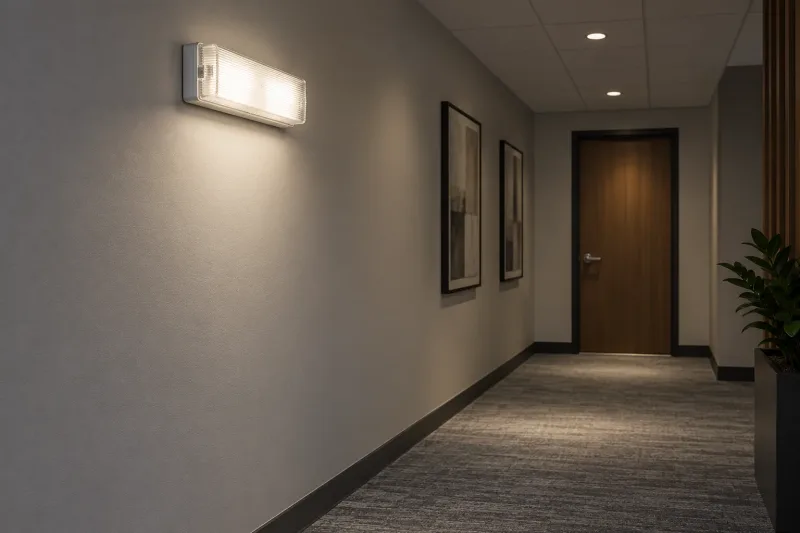
A maintained luminaire can provide light during normal operation as well as emergency operation; a non-maintained luminaire provides its emergency function when the normal supply fails. Confirm the exact behavior rather than relying on a short product title. Eaton’s emergency-lighting guidance distinguishes operating modes and emphasizes reviewing substitutions against the design.
Specify whether the project needs self-contained fittings or a centrally supplied arrangement, and whether signs and luminaires use different operating logic. The electrical designer must establish the connections and monitoring architecture. For purchasing, capture the model, variant and documented mode in a single schedule; two visually identical products can behave differently during a loss of normal lighting.
Request emergency-mode photometric evidence
Normal-operation lumens do not establish emergency performance. Request the relevant emergency output, distribution and spacing data, together with the test conditions. The designer should confirm that those data support the intended mounting height and layout. A decorative diffuser or changed optic can alter distribution, so it belongs in the exact configuration under review.
Keep the calculation file or approved spacing justification tied to the product revision. If a supplier offers a different model, ask the designer to reassess it before purchase. A claim of “equivalent wattage” does not show that an alternative delivers the required light at the necessary locations during its emergency operating period.
Compare quotations against one schedule
| Procurement item | Ask the supplier to identify | Decision owner |
|---|---|---|
| Operating mode | Exact maintained/non-maintained behavior | Electrical designer |
| Emergency performance | Output, distribution and duration evidence | Lighting designer |
| Battery arrangement | Chemistry, replacement reference and service access | Designer and operator |
| Testing | Manual, automatic or networked method | Operator and designer |
| Environment | Temperature and protection limitations | Project team |
| Documentation | Drawings, reports and model-specific records | Buyer with technical reviewers |
Do not score these columns by counting brochure features. A simple test arrangement that the operator can consistently manage may be a better project fit than a more complex system without a clear reporting process. Conversely, a large building can benefit from centralized status information if its staff and procedures support it.
A worked example of a corridor schedule
Assume an office renovation has a 20 m corridor with a corner, a stair entrance and two final exits. Assume the responsible designer has already determined the applicable performance and emergency duration. The procurement team receives a schedule containing eight luminaire positions and two signs, each with a unique drawing reference.
The supplier proposes a different bulkhead at three positions. Instead of accepting the change on price, the buyer requests emergency photometry and sends the revised variant to the designer. The designer reviews the corner and stair approach, then records whether positions or quantities must change. Eight fittings in this example are a starting schedule, not a spacing recommendation. The lesson is to retain the design connection when a purchase proposal changes.
Plan testing and battery service before ordering
Eaton’s testing and battery overview describes automatic testing and the role of status inspection. For your project, ask how results will be recorded, which person responds to a fault and what access is needed for service. Automatic tests do not remove the need for an operator’s response process.
Confirm replacement battery references, permitted procedures, availability and disposal arrangements with the supplier and operator. Plan how duration testing affects building occupancy and the period needed to restore readiness afterward. The required schedule comes from local requirements and the approved system; it should not be inferred from a general blog example.
Check the sample and handover package
Request a sample of the exact nominated configuration. Review mounting dimensions, indicators, label legibility, diffuser and battery service access. Any operational demonstration should follow manufacturer instructions under qualified supervision. Log the sample’s model, revision and documents so production approval has a clear reference.
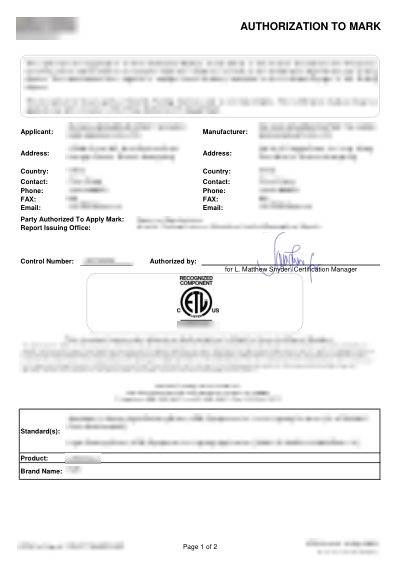
Before delivery, collect the approved schedule, current drawings, relevant declarations and reports, operation and maintenance instructions, spare references and commissioning requirements. Define who receives the final records and where they will be stored. Use the emergency-light product family and commercial equipment-lighting category as the inquiry starting point. The sample approval guide explains a controlled release, while OEM versus ODM helps assign responsibility when a design is customized.
Frequently asked questions
Can I choose an emergency light using its normal wattage?
No. Request emergency-mode output and distribution for the exact variant. The designer needs those data, together with duration and mounting information, to evaluate the intended layout.
Does self-test mean no maintenance is required?
No. Fault indication must lead to inspection, records and corrective action. Batteries and other components still need attention according to the approved system and manufacturer guidance.
Is one emergency duration suitable for every project?
No. Required duration depends on the applicable rules and building strategy. Have the responsible project professional establish it before asking for quotations, then ensure each proposed configuration documents the required performance.